
Minnesota property taxes start with the estimated market value assigned to your home by the county assessor. From there, your property classification is applied, such as residential homestead or nonhomestead. If your home qualifies for certain exclusions, such as the Homestead Market Value Exclusion, your taxable value may be reduced.
After that, Minnesota’s class rate system is used to determine tax capacity. Local tax rates from your county, city or township, school district, and special taxing authorities are then applied. The final bill may also include credits, referendum levies, special assessments, and other adjustments.
The simplest way to say it is this: your Minnesota property tax bill is your share of the local tax burden. Your home’s value matters, but it is only one part of the equation.
What Minnesota Property Taxes Pay For
Property taxes in Minnesota help fund local services that homeowners use every day, even when they do not think about them directly. These taxes support counties, cities, townships, public schools, roads, parks, public safety, libraries, and certain special taxing districts.
This is why two homes with the same market value can have different tax bills. A house in Minneapolis may fall under a different mix of taxing authorities than a house in Rochester, Duluth, Bloomington, St. Paul, or a smaller township. Even within the same county, school district lines and special districts can change the final amount due.
That local structure is also why Minnesota property tax rates can feel confusing. There is no single statewide property tax rate that applies to every homeowner. Your bill depends on your exact parcel, classification, local budgets, voter-approved levies, and applicable credits.
How Minnesota Property Tax Assessment Works
Your Minnesota property tax assessment begins with the county assessor estimating your home’s market value. This estimated market value is meant to reflect what the property would likely sell for under normal market conditions.
The assessor may consider recent comparable sales, property size, lot size, age, location, condition, finished square footage, improvements, and current market trends in your area. If similar homes near you are selling for more, your assessed value may increase even if you did not make any major upgrades.
This is where many homeowners get frustrated. The assessor does not set your tax rate, and the assessor does not decide how much your city, county, or school district spends. The assessor’s role is to estimate value and classify the property correctly. That value then becomes one part of the property tax calculation.
It is also important to understand the difference between estimated market value and taxable market value. Estimated market value is the assessor’s opinion of your property’s value. Taxable market value is the amount used for tax purposes after certain exclusions or adjustments are applied.
For many owner-occupied homes, homestead classification can reduce taxable value through the Homestead Market Value Exclusion. This is one reason homeowners should always confirm that their property is correctly listed as homestead if they live in the home as their primary residence.
How Minnesota Property Taxes Are Calculated
Minnesota property taxes are calculated in layers. First, the county assessor estimates the market value of your home. Next, your property classification is applied. A residential homestead, residential nonhomestead property, rental property, commercial property, agricultural land, and seasonal property may all be treated differently.
Once the classification is applied, Minnesota’s class rate system helps determine tax capacity. Tax capacity is not your final tax bill. It is the number used to divide local levies among taxable properties.
Local governments then set their budgets. Your county, city or township, school district, and special taxing authorities decide how much money they need from property taxes. That amount is called a levy. The levy is then spread across the taxable property base.
This is why your bill can increase even if your assessment did not rise dramatically. If the local levy increases, or if the tax burden shifts among different types of property, your share can still go up.
The last step includes adjustments such as credits, school referendum levies, special assessments, and other state or local factors. Some voter-approved school levies are calculated differently than standard tax capacity taxes, which is why school funding can have a noticeable effect on your bill.
Why Minnesota Property Taxes Increase
A higher home assessment is one common reason Minnesota property taxes increase, but it is not the only reason. Your bill can also rise because your county, city, township, or school district increased its levy. In plain English, that means local government needs more tax revenue to fund its budget.
School referendums can also increase property taxes. If voters approve a new operating levy or bond referendum, that cost may show up on future tax bills. This can surprise homeowners who were only watching their home value and not paying attention to school district proposals.
Homestead status is another major factor. If your property loses homestead classification, your taxable value and eligibility for certain programs may change. This can happen if the county believes the property is no longer your primary residence, if ownership changes, or if the required paperwork is not completed.
Your taxes can also increase because the tax burden shifts in your area. For example, if residential values rise faster than commercial values, homeowners may end up carrying a larger share of the local levy. This is one of the least understood parts of Minnesota property taxes. Your bill is not just about your house. It is about your house compared with the rest of the local tax base.
Home improvements may also affect your assessment. A new addition, finished basement, garage, major remodel, or other upgrade can increase your home’s estimated market value. Regular maintenance is different from a major improvement, but condition and upgrades can still influence how the assessor views the property.
How to Read Your Minnesota Property Tax Bill
Minnesota homeowners usually receive several tax-related notices, and they are not all the same.
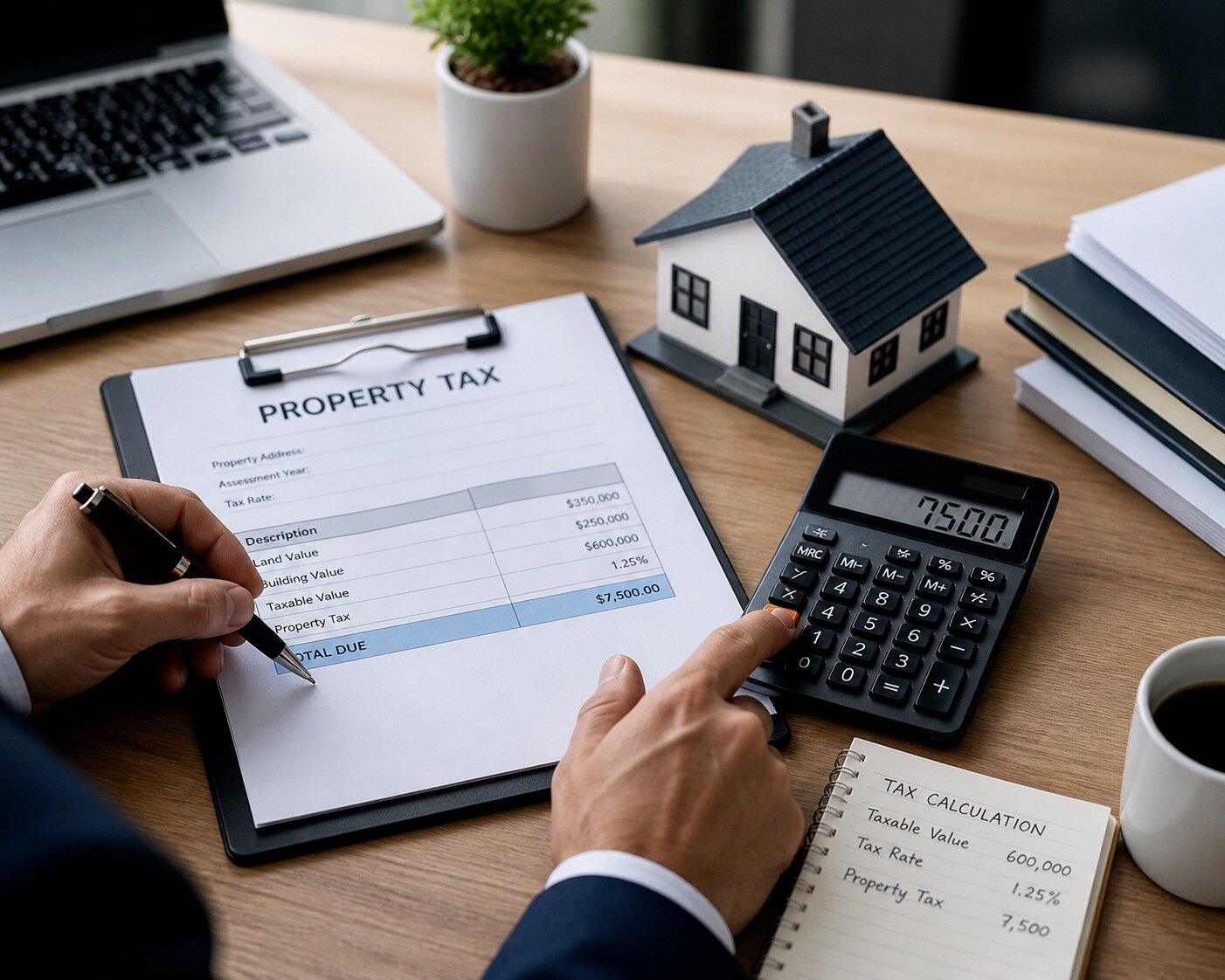
The valuation notice shows your estimated market value and classification. This is the document to review if you believe your property is overvalued or incorrectly classified. If the square footage, finished basement, number of bathrooms, garage size, or homestead status is wrong, you should contact the assessor as early as possible.
The Truth-in-Taxation notice shows proposed taxes. This usually arrives before the final tax statement and gives homeowners a chance to see how proposed local budgets may affect the upcoming bill. If your city, county, or school district is proposing a large levy increase, this notice can help explain why your future tax bill may rise.
The property tax statement is the actual bill. It shows the amount due, payment deadlines, taxing authorities, credits, and any special assessments. For most Minnesota real property, property taxes are commonly paid in two installments, with the first half due in May and the second half due in October.
If you are planning to sell, refinance, or resolve delinquent taxes, do not rely only on an old statement. Contact the county treasurer for the current payoff amount because penalties, interest, or other charges may have changed the balance.
Minnesota Property Tax Rates: Why There Is No One Simple Rate
Many homeowners search for “Minnesota property tax rates” expecting one number. Unfortunately, that number does not exist in a useful way.
Minnesota does not have one flat property tax rate for every home. Your effective rate depends on your county, city or township, school district, special taxing authorities, classification, credits, and local levy decisions.
Online property tax calculators can be helpful for rough estimates, especially if you are budgeting before buying a home. But a Minnesota property tax calculator cannot always account for every parcel-specific detail, such as special assessments, school referendums, classification changes, local credits, or county-specific charges.
The best estimate comes from your county property tax records. The best explanation usually comes from comparing your valuation notice, Truth-in-Taxation notice, and final property tax statement together.
Minnesota Property Tax Exemptions, Credits, and Relief Programs
Minnesota offers several programs that may reduce property taxes or help homeowners manage payments. The most common starting point is homestead classification. If you own and occupy your home as your primary residence, homestead status may reduce taxable value and help you qualify for other programs.
The Homestead Market Value Exclusion can lower the taxable value of qualifying homestead property. This does not erase the tax bill, but it may reduce the amount used in the calculation.
Some homeowners may also qualify for the Homeowner’s Homestead Credit Refund. This program is designed for homeowners whose property taxes are high compared with household income. There is also a special refund for certain homeowners whose property taxes increased significantly from the prior year, as long as the increase was not due to improvements.
Minnesota also has a Senior Citizens’ Property Tax Deferral Program. This may help qualifying older homeowners reduce current property tax payments, but it is not free money. The deferred amount becomes a loan that must usually be repaid when the home is sold or the deferral ends.
Disabled veterans, certain surviving spouses, and qualifying caregivers may also be eligible for a market value exclusion. Because these programs depend on specific qualifications and deadlines, homeowners should check with the Minnesota Department of Revenue or their county assessor before assuming they qualify.
What to Do If Your Minnesota Property Tax Assessment Seems Wrong

If your assessment looks too high, start by reviewing your property record. Do not begin with the argument that your taxes are too expensive. That may be true, but an appeal usually needs evidence that the value or classification is wrong.
Look for factual errors first. A home listed with too much square footage, an extra bathroom, a finished basement that is not actually finished, or the wrong condition rating may be overassessed. Homestead status should also be checked carefully.
Next, compare your property to similar recent sales. Good comparable sales should be close in location, size, age, style, and condition. A fully remodeled home is not a fair comparison to a house with major deferred maintenance. A lakefront home is not a fair comparison to a non-lake property.
If your home has problems that affect value, document them. Photos, contractor estimates, inspection reports, repair bids, house appraised for free, and recent appraisals can help show why the assessed value may be too high.
Before filing a formal appeal, contact the assessor. Many issues can be resolved informally, especially if the problem is a clear data mistake. If that does not work, Minnesota homeowners can use the Local Board of Appeal and Equalization, County Board of Appeal and Equalization, or Minnesota Tax Court, depending on timing and the appeal path available.
The key is to act early. Waiting until the tax payment deadline may leave you with fewer options.
Can You Sell a House With High or Delinquent Property Taxes in Minnesota?
Yes, you can sell a Minnesota house with high or delinquent property taxes, even if you need to sell the house after 1 year, but those taxes usually need to be addressed at closing.
If property taxes are unpaid, the balance can show up during the title search. Traditional buyers and lenders often want the taxes resolved before closing. Cash buyers may be more flexible because they are used to dealing with unpaid taxes, liens, title issues, repairs, and as-is properties.
For example, if you owe $8,000 in delinquent taxes and sell the home for $160,000, the taxes may be paid from the sale proceeds at closing. The seller would receive the remaining proceeds after taxes, liens, closing costs, and other payoff items are handled.
This is why waiting can become expensive. Penalties and interest can continue to grow. If the property also needs repairs or is hard to sell traditionally, delinquent taxes can make the situation more stressful each month.
If property taxes are one reason you are considering selling, Fair Price House Sale can help you compare options and see whether selling as-is makes sense.
Common Minnesota Property Tax Mistakes Homeowners Make
One common mistake is assuming the tax bill is only about home value. Your assessment matters, but local levies, school referendums, credits, classification, and tax base shifts can all affect the final amount.
Another mistake is ignoring the valuation notice. This notice is usually your best chance to catch errors before the final tax bill becomes a bigger problem. If the county has the wrong square footage, classification, or homestead status, you want to address that early.
Homeowners also put too much trust in online calculators. A calculator can help with rough planning, but your county tax statement is the real number. Special assessments, credits, and local levies can make your parcel different from the average.
A fourth mistake is appealing without evidence. Frustration alone usually does not change an assessment. Comparable sales, property record errors, appraisals, photos, and repair estimates are much stronger.
Finally, some homeowners let delinquent taxes sit too long. If you know you cannot keep up, it is better to understand your options early. Once penalties, interest, repairs, and missed payments start stacking up, the problem becomes harder to solve.
Frequently Asked Questions
How are Minnesota property taxes calculated?
Minnesota property taxes are calculated using your home’s taxable market value, property classification, class rate, local tax rates, credits, school levies, and other adjustments. Your bill is essentially your property’s share of local government budgets.
Why did my Minnesota property taxes increase?
Your property taxes may increase because your assessed value rose, local levies increased, a school referendum passed, your homestead status changed, or the tax burden shifted among property types in your area.
What is a Minnesota property tax assessment?
A Minnesota property tax assessment is the county assessor’s estimate of your property’s market value and classification for tax purposes. It helps determine how much of the local tax burden your property carries.
Is assessed value the same as taxable market value?
No. Estimated market value is the assessor’s opinion of what the home is worth. Taxable market value is the value used for tax purposes after certain exclusions or adjustments are applied.
What is the Minnesota Homestead Market Value Exclusion?
The Homestead Market Value Exclusion reduces taxable market value for qualifying owner-occupied homes. This may lower the final property tax bill for eligible homeowners.
When are Minnesota property taxes due?
For most Minnesota real property, first-half property taxes are due in May and second-half property taxes are due in October. Some property types may have different deadlines, so homeowners should verify dates with their county treasurer.
Can I appeal my Minnesota property tax assessment?
Yes. Minnesota homeowners can appeal their property value or classification through the local appeal process, county appeal process, or Minnesota Tax Court. The best first step is usually contacting the assessor and gathering evidence.
What proof do I need to appeal my assessment?
Helpful proof includes property record errors, comparable sales, photos of condition issues, repair estimates, inspection reports, and appraisals. The stronger your evidence, the better your chance of getting the value corrected.
Do Minnesota homeowners get property tax refunds?
Some homeowners may qualify for Minnesota’s property tax refund programs if they meet income, occupancy, homestead, and tax requirements. Homeowners should check eligibility each year because income limits and refund amounts can change.
Can I sell my Minnesota house if I owe property taxes?
Yes. A house with delinquent property taxes can often still be sold, but the unpaid taxes usually need to be paid or resolved at closing. A cash buyer may be more flexible if the property also has repairs, liens, or title issues.
If Minnesota property taxes are making it harder to keep the home, Fair Price House Sale is here to help. Zero pressure, zero obligation, just a straightforward conversation about your tax situation, your home’s value, and what options make sense for you.
Helpful Minnesota Blog Articles
- Selling Your Home During a Divorce in Minnesota
- Can I Sell Half of My House in Minnesota
- How to Sell a House With Flood Damage in Minnesota
- Should You Remodel Your Kitchen Before Selling Your Minnesota Home
- Selling A House With Unpermitted Work In Minnesota
- How Much Equity Do You Need Before Selling Your House
- How To Get Your House Appraised For Free In Minnesota
- FHA Required Repairs In Minnesota
- Can I Sell My Home After 1 Year
- The Difference Between Title and Deed Explained
- Selling a House With a Pending Lawsuit
- Average Cost To Sell A House In Minnesota
- How to Sell a Condemned House in Minnesota
- What Happens When a House Sits Vacant
- How to Sell a Condemned House in Minnesota