![Can One Owner Sell Jointly Owned Property in [market_city]](https://image-cdn.carrot.com/eyJidWNrZXQiOiJwcm9kdWN0aW9uLmNhcnJvdC11cGxvYWRzLm9uY2Fycm90LmNvbSIsImtleSI6InVwbG9hZHMvc2l0ZXMvNzkzMTcvMjAyNi8wNi9DYW4tbXktcGFydG5lci1zZWxsLW91ci1ob21lLXdpdGhvdXQtbXktYXBwcm92YWwucG5nIiwiZWRpdHMiOnsicmVzaXplIjp7IndpZHRoIjoxMTUyfSwidG9Gb3JtYXQiOiJ3ZWJwIiwid2VicCI6eyJxdWFsaXR5Ijo3MH19fQ==)


Co-owning a home works fine until it doesn’t. Disputes show up in every kind of arrangement, whether you bought together, inherited the place, or landed on the deed some other way. The split usually looks the same: one co-owner wants out, and the other wants to keep the property, rent the property out, or do nothing with it. In Minnesota, a co-owner generally can’t sell a jointly owned property outright without the other co-owner’s consent. What that co-owner can do is sell his or her own interest, or ask a court for a partition sale.
What Are the Forms of Co-ownership in Minnesota?
The co-ownership language on a deed carries consequences most property owners never think about until a dispute, a death, or a divorce forces them to. Minnesota decides property rights by the words on that document, so the form of co-ownership you signed up for matters long before anyone thinks about moving on. Learning what those words mean after the fact gets expensive.
Minnesota recognizes two forms of property co-ownership: joint tenancy and tenancy in common. That’s the whole list. Some states let married couples hold title as tenancy by the entirety, and Minnesota isn’t one of them, so any advice you read about that form doesn’t apply to property here. Each form carries different rights, different obligations for the owners, and very different outcomes when an owner dies or wants to leave the ownership arrangement.
In a tenancy in common, every co-owner holds a separate interest that can be sold, assigned, or left to heirs. Those property interests pass to successors independently of the other owners. Joint tenancy runs on a right of survivorship instead. When one co-owner dies, that share moves to the surviving co-owner automatically, and probate never enters the picture. Minnesota also abolished the old common law requirement that joint tenants take equal interests at the same time, under Minn. Stat. 500.19, so the form is more flexible here than the textbook version. Working out which one you have is step one in any co-ownership problem.
If a co-owner wants out and nobody else can afford to buy their interest, K&G Investments, which buys properties for cash, may be the faster route. Cash offers usually land below full market value. A seller trades dollars for speed and certainty.
Joint Tenancy Vs. Tenants in Common in Minnesota
Tenants in common can each transfer an individual ownership interest without asking anyone. Own a 50% share? You can sell that share to a third party tomorrow. Conveying the entire property with clear title is a different story, and that takes every owner’s consent and signature.
The rule on a full sale is the same for joint tenancy: all owners have to agree. A joint tenant can still transfer their own interest to a third party. That severs the joint tenancy as to that interest, turns the share into a tenancy in common, and ends the right of survivorship attached to it. Minnesota does put a guardrail on this. Under Minn. Stat. 500.19, subdivision 5, a severance is legally effective only in four situations. The instrument has to be recorded with the county recorder, or signed by all the joint tenants, or ordered by a court, or effected through bankruptcy. A divorce decree severs those interests too, unless the decree preserves them.
Married couples have a separate rule worth knowing. Minn. Stat. 507.02 says no conveyance of a homestead is valid without both spouses’ signatures, even when only one spouse appears on the property title. That single sentence has stopped more closings than most sellers expect.
One thing almost nobody thinks about at the signing table: the co-ownership wording in that document controls everything that follows. Vague deed language defaults to tenants in common under Minnesota law, which carries inheritance consequences for the property that a title company will flag the second you try to sell.
Can a Co-owner Sell Their Ownership Interest Without Selling the Entire Property?

Selling an ownership interest and selling the property are two different transactions. Plenty of co-owners learn that the hard way. In Minnesota, a co-owner generally can’t sell the whole property without the other owners on board, but selling an individual ownership interest is often possible depending on the form of co-ownership involved.
Tenants in common each keep a separate ownership interest in the property. That interest can be sold, transferred, or gifted to a third party without permission. Whoever buys the interest becomes a co-owner on the spot. Legal, yes. Easy, no. Finding a buyer willing to take a partial interest with limited exclusive control is genuinely hard.
Joint tenants can transfer an ownership interest too. Doing it severs the arrangement as to that interest and converts the share into a tenancy in common, which wipes out the right of survivorship on the transferred piece. So one co-owner’s sale can reshape the entire ownership structure of the property even while the other owners object.
If unloading a partial ownership interest looks impossible, K&G Investments may be able to make a cash offer on your share. Contact us to talk through your situation and your options. No obligation.
What Happens When Co-owners Disagree About Selling Property in Minnesota?
Co-ownership disputes drain money and patience at the same time. Decisions get postponed, and relationships fray. Owners end up stuck in something that feels unsolvable, and the property’s future stays up in the air for years.
Trouble starts when one co-owner flatly refuses to cooperate. Sometimes a transaction dies over something petty. Neither joint tenants nor tenants in common can convey full ownership of a property without every co-owner involved. Buyers need clear title, and title companies need all owners to sign, so a single holdout can freeze the sale of a jointly owned property completely. In that situation, investor house buyers in Farmington and other Minnesota cities give owners another way to move forward.
The money side gets ugly fast. Property taxes, insurance premiums, and mortgage payments keep coming no matter how the argument is going. When one co-owner stops chipping in, the rest absorb it, and those costs eat into whatever equity is left when the property is finally sold.
Out-of-court Options for Co-owners in Minnesota
Court should be the last stop, not the first. A voluntary buyout is the cleanest fix: the buying co-owner pays the selling co-owner for their ownership interest at an agreed number, and a new title deed records the change. Legal costs stay low, the whole thing moves faster, and both co-owners get on with their lives.
Mediation is the next option. A neutral third party helps co-owners reach terms without the process turning adversarial. The courts take this seriously. Under Rule 114 of the General Rules of Practice, civil cases are subject to alternative dispute resolution, and if the parties can’t agree on a process, the court orders a non-binding one. Choosing mediation voluntarily gives both sides more control over the outcome than a court-ordered sale ever will.
Some co-owners simply list the property on the open market and split the sale proceeds at closing. If both want out but argue over price, a third-party appraisal settles it without anyone setting foot in a courtroom.
Selling directly to a local buyer gets overlooked more than it should. When both parties want a clean exit, a direct sale skips agent commissions, showings, and the waiting. Minnesota Realtors clocked the statewide median at 49 days on market in June 2026, and that’s before you add the weeks it takes to close. Carrying costs on a property nobody wants keep running the whole time.
Can One Co-owner Force the Sale of a Jointly Owned Property in Minnesota?

Yes. One co-owner can force the sale of a jointly owned property through a partition action, and a refusal from the other owners doesn’t stop it. A co-owner with a minority interest holds the same right as everyone else, so a single dissenting owner can unwind an arrangement the majority wants to keep.
The law here changed recently, and a lot of older articles haven’t caught up. The Minnesota Partition Act, Chapter 558A, took effect August 1, 2025, and it governs every property partition action commenced on or after that date. Chapter 558, the statute Minnesota used for more than a century, no longer applies to new filings. Under Minn. Stat. 558A.03, any co-owner holding an interest as a joint tenant or tenant in common can bring an action against the others. That action can seek a sale of the interests and division of the proceeds, a partition in kind, or any other fair and equitable remedy.
Co-owners sit on jointly owned properties for years, assuming the other side has to agree first. That assumption delays a sale and costs real money. Every month of stalemate is another month of taxes, insurance, and upkeep shrinking what each co-owner eventually walks away with.
Partition law doesn’t care which co-owner wants to sell. It cares that co-ownership has hit an impasse, and it provides a legal exit through the courts. Minn. Stat. 558A.09 puts it bluntly: a dispute between the parties is no defense to the action. Minnesota cash buyers may also take on an ownership interest directly, which beats a court-ordered sale for most people.
How Does Actual Partition Work in Minnesota?
Filing a partition lawsuit first is usually a mistake. Going to court before you’ve tried to resolve a dispute runs up legal bills and stretches the timeline out. Negotiation or mediation gets you there faster and cheaper in most cases.
A Minnesota partition action moves through several stages. The court determines each co-owner’s interest, decides whether the property gets divided or sold, appoints one to three referees to carry out the judgment, and then distributes the proceeds among the owners. Every stage needs court involvement, which is exactly why it costs what it costs.
Most residential properties can’t be split down the middle, so a court-ordered sale is the practical outcome. A single-family property isn’t getting sawed in half. The 2025 Act did change how those sales run: a referee can now sell by any method that produces the highest and best price, instead of being locked into a public auction.
When the court orders a sale, appraisal fees, court costs, referee compensation, and attorney fees come out of the proceeds before anyone gets paid. Under Minn. Stat. 558A.19, the court apportions those fees and costs among the parties. Both owners usually end up with less than a voluntary sale would have produced.
How Minnesota Courts Handle Property Partition Disputes
Dividing raw land or rural acreage physically can work. Splitting a house cannot, so partition by sale is where most jointly owned property disputes in Minnesota end up. The old law leaned hard toward physical division. The 2025 Act dropped that bias and told courts to weigh the circumstances instead.
Minn. Stat. 558A.11 lists what a judge considers before ordering partition in kind. The list covers whether the property can practicably be divided and how much value division would destroy. It also covers how long the family has owned it, sentimental or ancestral attachment, the current lawful use, and each owner’s contribution to taxes, insurance, expenses, and improvements. No single factor decides it.
That contribution factor matters more than people expect. A co-owner who covered the property taxes alone for years while the other contributed nothing has a real argument for reimbursement out of the proceeds. Courts can shift the split toward what’s fair rather than what the percentages say on paper.
File a partition action once you’ve exhausted attempts at cooperation, or when a co-owner has vanished or is putting the property at risk. Judges notice who tried. Showing up in court with no documented attempt at negotiation tends to go badly, both for the judge’s read on you and for how costs get apportioned. Saved mediation emails count.
What Happens If One Co-owner Lives in the Property and the Other Does Not?
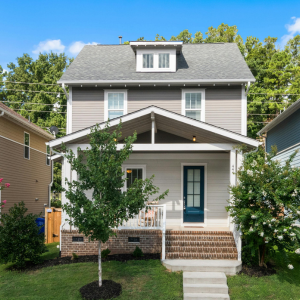
One co-owner living in the property while the other lives across town is a reliable source of conflict. In Minnesota, co-owners generally hold equal rights to possess and use the property no matter what percentage each one owns. Living there doesn’t upgrade your rights.
Expenses become the flashpoint. Mortgage payments, taxes, insurance, and maintenance keep running regardless of who occupies the property. Unequal contributions build resentment fast. A co-owner who pays more than a fair share may be owed reimbursement or a credit in a future sale or partition action.
The rent question comes up constantly. In most cases, an occupying co-owner living in the property owes the other nothing. Courts look harder when one owner locked the other out or collected rental income and kept all of it.
When nothing gets resolved, the court weighs both parties’ conduct and the surrounding circumstances in deciding how proceeds get distributed in a partition case. Facts and financial contributions drive the outcome.
What Co-owners Need to Know Before Buying Property Together in Minnesota
Deed language controls ownership rights for as long as two or more people hold title to the property. People spend more time picking paint colors than reading the ownership clause, even though that clause decides whether an ownership share passes to heirs or transfers automatically to a co-owner at death. It also affects creditors’ rights and how easily a co-owner can exit the arrangement.
Here’s the part that surprises couples. Minnesota has no married-couple exception here. Under Minn. Stat. 500.19, subdivision 2, all grants to two or more persons create a tenancy in common unless the deed expressly declares joint tenancy. Spouses and unmarried partners get the same default. If you wanted survivorship and the document doesn’t say so, you don’t have it, and that ownership interest heads to probate or a stranger instead. Most co-owners don’t find out until they decide to sell the property.
Separation and divorce bring their own version of this. One party refuses to cooperate with a sale, and even a divorce decree spelling out how proceeds should be divided won’t stop an uncooperative co-owner from dragging the sale out. Legal guidance helps, and so does knowing your alternatives. A company that buys homes in St. Paul and other cities across Minnesota can move faster than a traditional listing when co-owners need to sell the property.
Anyone buying property with a spouse, sibling, friend, or business partner should put a co-ownership agreement in place from the start. Cover buyout terms, how you’ll value the property, and what events trigger a sale. Drafting one in Minnesota costs a fraction of a partition lawsuit.
Frequently Asked Questions
How Do You Sell a Jointly Owned Property?
Every co-owner normally has to sign the deed of conveyance for a full sale to close with clean title. If everyone agrees, you can list with an agent, sell directly to a buyer, or negotiate a buyout where one co-owner takes over the other’s interest. If one owner digs in, a partition action under the Minnesota Partition Act, Chapter 558A, is the legal mechanism that can force a resolution.
Can My Parents Sell Me Their Property for $1?
Technically yes. Minnesota law sets no minimum sale price between private parties. The catch is that the IRS treats a transfer far below market value as a gift. That can trigger federal gift tax reporting and affect your cost basis when you eventually sell. Minnesota repealed its own gift tax in 2014, though gifts made within three years of death still count toward the state estate tax. An estate planning attorney can lay out the cleanest structure for an intra-family transfer.
Why Is It Wise to Avoid Joint Ownership?
Joint ownership works right up until the co-owners stop agreeing. After that, your ability to sell, refinance, or make a major repair to the property can be blocked by someone else’s refusal. Disputes run for years and cost thousands in legal fees. If you’re taking title jointly anyway, a written co-ownership agreement and a clearly worded deed prevent most of the worst outcomes.
If you’re in a co-ownership situation in Minnesota and aren’t sure what your options are, K&G Investments would be happy to talk it through with you. No pressure, no obligation. Contact us at (612) 400-8070, and let’s figure out what makes the most sense for your specific situation. We can also provide a fair cash offer if selling your property is the right solution for your circumstances.
Helpful Minnesota Blog Articles
- How to Sell Your House Rent-to-Own in Minnesota
- How to Sell a House with a Squatter in Minnesota
- How to Sell an Apartment in Minnesota
- How to Choose a Title Company in Minnesota
- Can You Sell a House with Asbestos in Minnesota?
- Documents Required for Inherited Property in Minnesota
- Can You Sell a House That Failed Inspection in Minnesota
- Best and Worst Months to Sell a House in Minnesota
- Can My Spouse Sell Our House Without My Consent in Minnesota
- Who Pays Closing Costs When Selling A House in Minnesota
- Can You Sell A House with A Mortgage in Minnesota
- Can a Jointly Owned Property Be Sold by One Owner in Minnesota
- Selling a House With Solar Panels
- Best Time to Sell a House in Minnesota