![How to Sell a House with Solar Panels [market_city]](https://image-cdn.carrot.com/eyJidWNrZXQiOiJwcm9kdWN0aW9uLmNhcnJvdC11cGxvYWRzLm9uY2Fycm90LmNvbSIsImtleSI6InVwbG9hZHMvc2l0ZXMvNzkzMTcvMjAyNi8wNi9Ib3ctdG8tU2VsbC1hLUhvdXNlLXdpdGgtU29sYXItUGFuZWxzLnBuZyIsImVkaXRzIjp7InJlc2l6ZSI6eyJ3aWR0aCI6MTE1Mn0sInRvRm9ybWF0Ijoid2VicCIsIndlYnAiOnsicXVhbGl0eSI6NzB9fX0=)

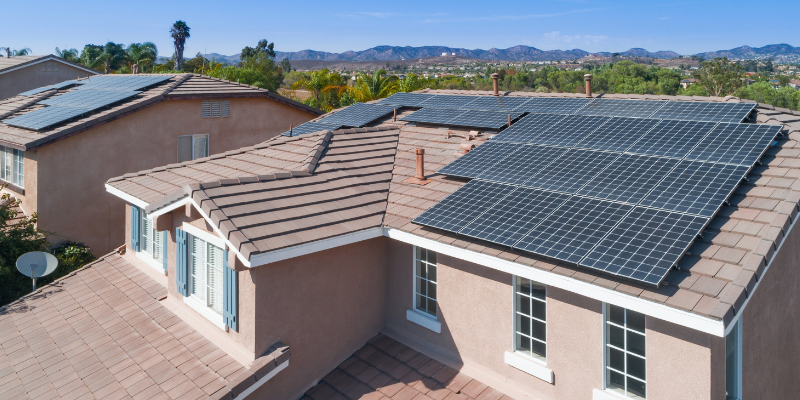
You spend years watching your electric bill shrink, then you list the home and the questions start. Roof panels that saved you thousands can read as a selling point or a closing-table headache. One detail decides which: how you own them. Owned outright, financed, leased, or running under a power purchase agreement, each one moves through a sale differently. Selling a house with solar panels touches your buyer pool, your appraisal, your lender’s underwriting, and your closing date. Worth knowing where you stand before the sign goes in the yard.
What Type of Solar Ownership Do You Have?
Sit down across from me at your kitchen table, and I’ll ask you one thing first. Do you own those panels free and clear, are you still paying a solar loan, or did you sign a lease or a power purchase agreement?
Your answer shapes the rest of the sale. Owned outright means a clean transfer. A solar loan with a balance usually means a UCC-1 fixture filing sits against the property, and it turns up in the title search. Under a lease or PPA, a third party holds a legal interest in equipment bolted to your roof, and your buyer has to qualify to take over that contract. Not every buyer does.
Sellers get tripped up by the middle case most often. You bought the solar system, you’re proud of it, and you think of it as yours. Your lender thinks of it as collateral, and so does the title company. Both views are right, and only one of them shows up at closing.
Pull the original paperwork and read the top of page one. It says “Solar Loan Agreement,” “Solar Lease Agreement,” or “Power Purchase Agreement.” That line decides your path. Can’t find it? Call the company listed in your monitoring app and ask for a copy. Companies in that industry get bought out all the time, so if your original installer is gone, whoever services the contract now holds the file.
If you want a fast, low-hassle sale, we can make a cash offer with no repairs, no delays, and no financing approvals. Contact us, and we’ll review your property and give you a straightforward offer that accounts for whatever solar arrangement you have.
Owned Solar Systems Are the Easiest to Transfer
Owning your solar system outright is the one scenario where solar panels work fully in your favor when you sell. No liens sitting against the property. Nothing to transfer to a leasing company. And no third party gets a vote on your buyer.
Paid-off panels go to the buyer at closing like a water heater or a built-in appliance. Nobody runs a credit check. Nothing gets renegotiated. An appraiser can credit the value, your buyer’s lender has nothing extra to clear, and you keep the premium the solar system earned you. Lawrence Berkeley National Laboratory research put that premium at roughly $4 per watt on host-owned systems, about $15,000 on an average-sized 3.6-kilowatt system, and found nothing statistically significant on third-party owned systems.
There’s a second benefit sellers tend to underrate. With an owned system, your buyer pool stays wide open. Cash buyers, conventional buyers, FHA buyers, VA buyers, and investors can all move on the home without a third-party approval hanging over the sale. Every restriction you take out of the transaction is one more buyer who can actually close.
Warranties matter to buyers more than most sellers expect. Product warranties on residential solar panels commonly run 10 to 15 years, and premium lines stretch to 20 or 25. Performance coverage is more uniform, with 25-year performance warranties close to standard. Check whether yours follows the home and whether the manufacturer wants the change registered. Then keep the paperwork where you can find it, because buyers’ agents ask for it before they write an offer.
How to Sell Your House with Solar Panels

Start with the contract, not the listing photos. Selling a house with solar panels goes smoothly when you know your ownership type, your payoff number, and your transfer rules before a buyer ever walks through the door.
Order the title report early. Your closing agent can tell you within days whether a UCC-1 fixture filing sits in the land records, and that one answer changes how you price the home and how you negotiate.
Call your solar company next and ask two questions. What does it take to transfer this agreement, and how long does your team need? Some transfer departments move in a week. Others take a month, and a month is plenty to wreck a closing date.
Then gather documents. Contract, specs, permits, warranties, production history, recent utility bills. Sellers who hand that folder over on day one spend far less time answering lender questions in week three.
Price it honestly last. An owned system supports your asking price on the home. A lease or PPA transfers as an obligation your buyer inherits, and pretending otherwise just moves the argument to the inspection period.
Financed and Leased Solar Panels Require Extra Steps
A solar loan secured against the home is the most common late surprise in these sales. Title runs the search, the solar lien appears, and everyone stops while a payoff amount gets sorted out. Closings slip over exactly because of this.
Paying the remaining balance from sale proceeds at closing is the usual fix. The lien clears, and your buyer takes the solar system free and clear. Some solar lenders let a buyer assume the loan instead, though that takes lender approval and separate qualification. Not every solar loan is assumable. Confirm that with your solar loan servicer early rather than during escrow.
Ask for the payoff statement in writing and give escrow the expiration date on it. Solar lenders often quote a payoff that’s good for 10 or 15 days, and if your closing moves, escrow needs a fresh number. That small step keeps the lien release from lagging behind the sale.
An unsecured solar loan is simpler because no lien encumbers the property. You pay off the balance, and your buyer gets the home with an owned system. Either way, ask your title company to pull the report before you’re deep into escrow so you know what you’re handling.
K&G Investments can buy your home for cash and handle the solar loan payoff or the UCC-1 lien at closing, which keeps the sale moving instead of stalling.
The Difference Between a Solar Lease and a PPA
Under a solar lease, you pay a fixed monthly fee to use the power the system makes. Under a power purchase agreement, or PPA, you pay per kilowatt-hour at a contract rate. Many of both carry an escalation clause, typically 1 to 3 percent a year, with 0.99, 1.99, and 2.99 percent turning up most often. A buyer who runs the math on 15 remaining years sometimes walks once the later payments come into view.
Both arrangements need the provider’s approval to transfer, and your buyer has to pass a credit check. Providers don’t publish their thresholds, so ask yours directly instead of guessing. A buyer can clear the mortgage and still get turned down on the solar agreement, and that stops everything.
Transfer timelines vary, and a slow transfer department is the most common reason a solar sale misses closing. Loop in the transfer team early, before listing if you can. That gives you time to confirm buyer eligibility or look at a buyout if approval turns into a problem, and it keeps your closing date where you put it.
Documents You Need Before Listing Your Solar Home

Appraisers can’t credit what they can’t document. With no production history, your premium stays theoretical and never reaches the appraisal report. Low numbers follow, even on a solar system that’s running fine. That matters for cash home buyers in Minneapolis and the surrounding Minnesota cities, where the appraisal often sets your ceiling.
Pull these together before you list. The installation contract with system size and specs. Permits and inspection records. Current warranty documents for the panels and the inverter. At least 12 months of production data, plus recent utility bills showing your net metering credits. That package cuts appraisal questions and heads off delays during underwriting.
Financed solar system? Add a current payoff statement. Leased or under a PPA, get the full agreement and the transfer procedure from your solar company so buyers and lenders can verify the obligation fast. Clear transfer paperwork is what keeps late lender conditions from showing up.
One caution on value. Fannie Mae’s guidelines say the value of leased solar panels can’t be included in the appraised value of the property. Owned systems can be credited. Leased ones can’t, no matter how well they produce.
Should You Pay Off Solar Before Listing or Sell With It?
There’s no universal answer here. It turns on your payoff amount, your rate, and how much the lien narrows your buyer pool. Confirm the exact payoff terms with your lender and your closing agent before you list, because every loan and title situation reads a little differently.
Paying it off first simplifies everything. The UCC-1 lien comes off title, lender questions disappear, and you market the home as fully owned solar from day one. That widens your buyer pool, especially with FHA and VA buyers and anyone who wants a simple transaction.
Carrying the loan through closing makes more sense when the payoff is large. In most cases, the balance gets satisfied from sale proceeds, and the lien releases as part of escrow. Know your numbers early, and you can price the home and negotiate without a surprise in week five. Coordinate with escrow so the payoff statement is right the first time.
Sellers ask me which way is better, and the honest answer is that both sell fine. A seller with a small balance usually clears it and sells clean. A seller with a large balance sells with the loan attached and lets escrow handle the payoff.
Watch the lien release itself. Paying the balance doesn’t clear the lien from the land records on its own. Somebody has to file the termination, and that somebody is usually your solar lender, working on the lender’s schedule. Your title company and escrow should confirm the release in writing before closing, so raise it during escrow rather than after the home closes.
How Solar Impacts Mortgage Approval for Buyers
Solar doesn’t only affect you. It can decide whether your buyer qualifies at all, including investor house buyers in Bloomington and other Minnesota cities. Fannie Mae treats lease and PPA payments as ongoing monthly obligations, and they land in the buyer’s debt-to-income ratio during underwriting. Narrow exceptions exist, mostly for agreements carrying a production guarantee or payments calculated purely on energy produced.
That monthly line reduces how much home a buyer qualifies for even when they’re otherwise strong. It can push a borderline buyer out entirely. Lenders also want proof that the buyer can assume the solar agreement, which is a second approval sitting on top of the mortgage. A PPA with a long escalation tail is the version buyers push back on hardest.
Financed solar systems complicate underwriting too. When that fixture filing is recorded in the land records, the lender counts that debt in the buyer’s ratios and folds the panels into the combined loan-to-value calculation. Find that out in week one, not week six. Late discoveries mean re-approvals, revised terms, and sometimes a canceled contract.
Tax Implications and Incentive Clarity

Nobody looks at the tax side of a solar home sale until late, which is why it surprises people. These questions rarely stop a closing on their own. They can rattle a buyer, add underwriting questions, and slow down due diligence.
The federal residential clean energy credit is the one people ask about most. It ended for systems whose original installation was completed after December 31, 2025, so a buyer looking at your panels today can’t claim that credit on your installation, and you can’t hand it over. If you claimed it while you owned the system, keep the filing in your records. Buyers ask.
State and local rebates work differently everywhere, and so does property tax treatment of solar. Some places exempt the added value, and some don’t. Ask your county assessor rather than trusting a forum post, and run anything that affects your return past a tax professional, because I’m not a CPA.
Missing paperwork is the real cost here. Clear records of incentives, rebates, and filings keep underwriting moving and cut the last-minute questions from lenders and title companies.
Common Transaction Breakers in Solar Home Sales
Most solar transactions close fine when ownership and paperwork are clear. A few recurring problems stall the rest, and nearly all of them trace back to a third party working on its own timeline.
The most common one is the solar company rejecting the buyer for your home. Mortgage approval and lease or PPA transfer approval are separate decisions, and a buyer can pass one while failing the other. That failure late in escrow can end the sale unless a backup buyer is waiting.
Thin solar production data comes next. Without 12 months of history, appraisers and lenders struggle to justify a value adjustment, which opens appraisal gaps and renegotiations. It usually surfaces once underwriting starts.
Appraisal is the quiet one. Homes with solar sell against comps that often have no solar at all, and an appraiser working without production data tends to round down. A low appraisal doesn’t kill a sale by itself. It hands your buyer a reason to reopen the price, which is a slower way to lose the same money.
Hidden liens finish the list. A UCC-1 lien found late forces payoff calculations and a revised closing timeline, sometimes by weeks. All of it is avoidable if you look before you list.
Frequently Asked Questions
Is It Hard to Sell Your House If You Have Solar Panels?
Owned solar panels help you sell. Zillow reviewed homes that changed hands between March 2018 and February 2019 and found that homes with solar-energy systems sold for 4.1 percent more than comparable homes without them. On a median-valued home that worked out to about $9,274. Berkeley Lab found a similar premium on owned systems and none on leased ones. The friction comes from leases and PPAs, because your buyer has to qualify for the transfer and some would rather not take on the payment.
Can I Remove My Solar Panels When I Sell My House?
You can. It rarely pays. Removing and reinstalling a typical 15-panel system runs about $2,800 to $4,800; the roof usually needs repair work afterward, and the system was engineered around your roof pitch and sun exposure. Most sellers come out ahead leaving the solar panels on the home.
What Is the 20% Rule for Solar Panels?
The 20% rule is a sizing guideline, not an appraisal rule. It says to design a system that generates about 20 percent more power than your typical usage, which covers cloudy stretches, heavy months, and the efficiency panels lose as they age. Multiply your average monthly kilowatt-hour usage by 1.2, and you have the target. You’ll see it misquoted online as a cap on how much value solar panels can add to a home, and that version isn’t a real appraisal standard.
Is It Harder to Sell a Home with a Solar Lease?
Yes, a solar lease adds steps an owned system doesn’t. Your buyer qualifies with the leasing company, the lender may review the contract, and some buyers don’t want a long-term payment obligation. It’s still very doable. A 2017 Lawrence Berkeley National Laboratory study collected 230 third-party-owned solar contracts from public records and found 113 of them, about 49 percent, transferred in a home sale. Prep work and early honesty carry most of the weight.
If you’re selling a home with solar panels in Minnesota and want a straightforward conversation about your options, K&G Investments is a local resource that has handled every type of solar situation you can imagine. Owned systems, active leases, financed panels with liens, and PPAs with escalation clauses. No pressure, no obligation. Just a real conversation about where you stand and what makes sense for your situation. Reach out to us at (612) 400-8070 to discuss your options and receive tailored answers for your specific situation.
Helpful Minnesota Blog Articles
- How to Sell Your House Rent-to-Own in Minnesota
- How to Sell a House with a Squatter in Minnesota
- How to Sell an Apartment in Minnesota
- How to Choose a Title Company in Minnesota
- Can You Sell a House with Asbestos in Minnesota?
- Documents Required for Inherited Property in Minnesota
- Can You Sell a House That Failed Inspection in Minnesota
- Best and Worst Months to Sell a House in Minnesota
- Can My Spouse Sell Our House Without My Consent in Minnesota
- Who Pays Closing Costs When Selling A House in Minnesota
- Can You Sell A House with A Mortgage in Minnesota
- Can a Jointly Owned Property Be Sold by One Owner in Minnesota
- Selling a House With Solar Panels
- Best Time to Sell a House in Minnesota